
Foam Insulation
What is Foam Insulation ?
Spray foam insulation is both an insulating and air-sealing material that blocks air movement in wall, floor, and ceiling cavities. It can seal around electrical outlets, light fixtures, and the joints where walls meet windows and doors.
This type of insulation can be applied into any open cavity, such as those found in new construction, attics, crawl spaces, and rim joists.
Unlike traditional insulation, spray foam maintains its shape over time. When it’s installed, it expands to fill cracks, gaps, and crevices, so it won’t compress, sag, or settle as the years go by.


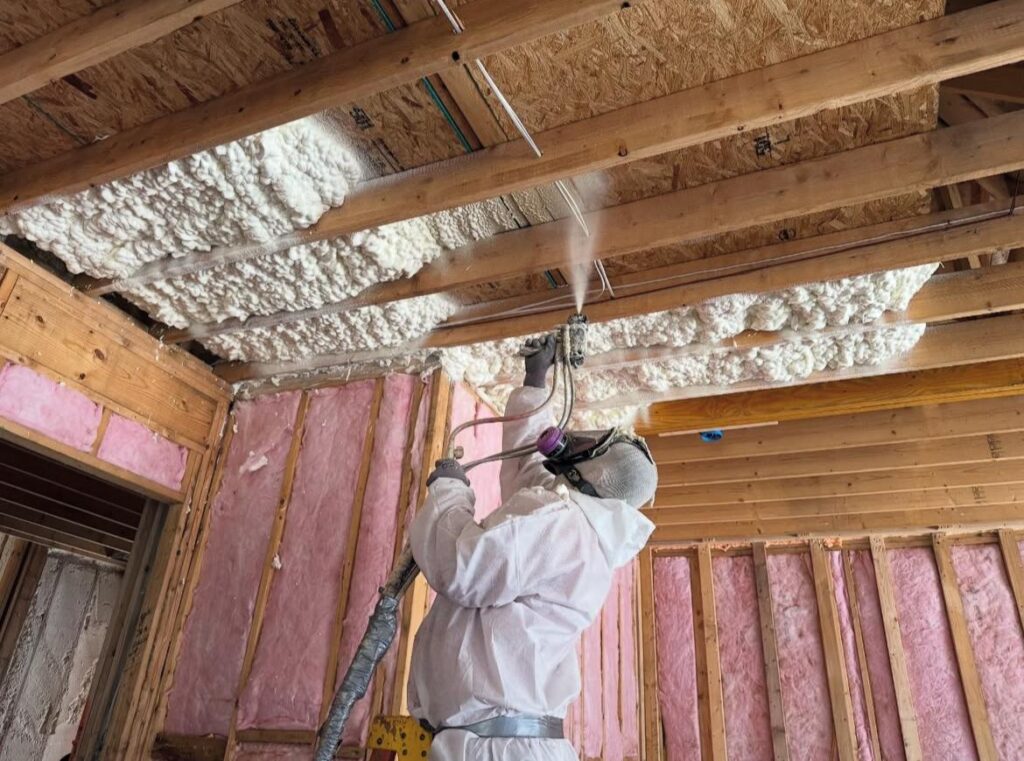
How Spray Foam Works?
Open-cell and closed-cell spray foam not only insulate your home, but also create an effective air seal. This type of insulation offers multiple benefits, including noise reduction, helping to discourage mold growth, minimizing air movement, and eliminating drafts and cold floors. It can also contribute to lowering your monthly energy bills.
Spray foam insulation affects both conduction (heat transfer) and convection (air movement), which directly influence your home’s comfort and energy efficiency. The main purpose of any insulation is to slow down the flow of heat into or out of a space—keeping your home warm in the winter and cool in the summer.
Air leakage is a common issue in many homes and a major source of energy loss. Some houses can lose enough air in a single day to fill a couple of blimps, which has a significant impact on heating and cooling costs.
Certain open-cell spray foam products can expand up to 100 times their original size, allowing them to fill every gap and crevice within a cavity. In contrast, traditional insulation materials like fiberglass and cellulose can leave unfilled spaces where air can escape.
By choosing spray foam insulation, you can help create a more comfortable, draft-free, and energy-efficient home.
What Is the Difference Between Open Cell and Closed Cell Spray Foam Insulation?
Spray foam insulation is available in two types: open-cell and closed-cell.
Open-cell spray foam is lightweight and flexible because of its structure. As it cures, the gas inside each cell escapes through tiny openings in the cell walls, leaving behind soft, pliable foam that can shift slightly as it settles.
Closed-cell spray foam, on the other hand, is much denser and heavier. It forms a firm, rigid surface that offers greater resistance to weather conditions and temperature changes.